
Home Remedies in West Lafayette
Learn safe and appropriate home care guidance from the team at Creekside Animal Hospital.
Simple Home Care Tips for Common Pet Concerns
While we cannot diagnose or treat your pet through our website, we are happy to share a few of our favorite home care tips for common concerns that may not always require an immediate trip to the veterinarian. If your pet’s condition persists or worsens despite home care, please call Creekside Animal Hospital in West Lafayette to schedule an appointment. There are many over-the-counter human medications that may be used in pets, but you should always call our office before giving your pet any medication that was not prescribed. Tylenol, Advil, and Motrin are safe for humans but can cause severe damage in pets. Please never give your pet these medications, as even small doses can lead to serious health problems.
Please note that our team is unable to provide specific medical advice or treatment recommendations over the phone unless your pet is a current patient of Creekside Animal Hospital. This policy helps ensure that we are making safe, informed decisions based on your pet’s medical history and an appropriate examination.
Diarrhea
Diarrhea can be caused by many different things that pets may ingest. We treat diarrhea similarly to vomiting, with one important exception: if your pet has diarrhea but is not vomiting, do not remove water. Pets can become dehydrated quickly, and we want to prevent that from happening. If your pet has diarrhea, you may try the following:
- Offer small amounts (about 2 tablespoons) of a bland diet frequently for 12 to 24 hours.
- Once the diarrhea resolves, continue the bland diet for an additional 2 to 3 days.
- Gradually mix the bland diet with your pet’s regular food over the next 2 days until they return to their normal diet.

Upset Stomach or Vomiting
- Remove all food and water for 12 to 24 hours.
- If vomiting stops, offer small amounts of water for the next 12 to 24 hours.
- If water is tolerated, begin feeding a bland diet for 2 to 3 days.
Bland Diet Recipe
- 2/3 cup cooked rice (instant rice is fine)
- 1/3 cup cottage cheese
Prepare enough to last 2 to 4 days and keep refrigerated.
Dry Skin Treatments
- 1 part Alpha Keri Bath Oil
- 20 parts water
Mix in a spray bottle and apply lightly to your pet daily. Be sure to work the mist down into the coat so it conditions the skin. If your pet appears oily, dilute the mixture with more water. If your pet has allergies, avoid perfumed bath oils, as fragrance may worsen irritation.

Seasonal Allergies
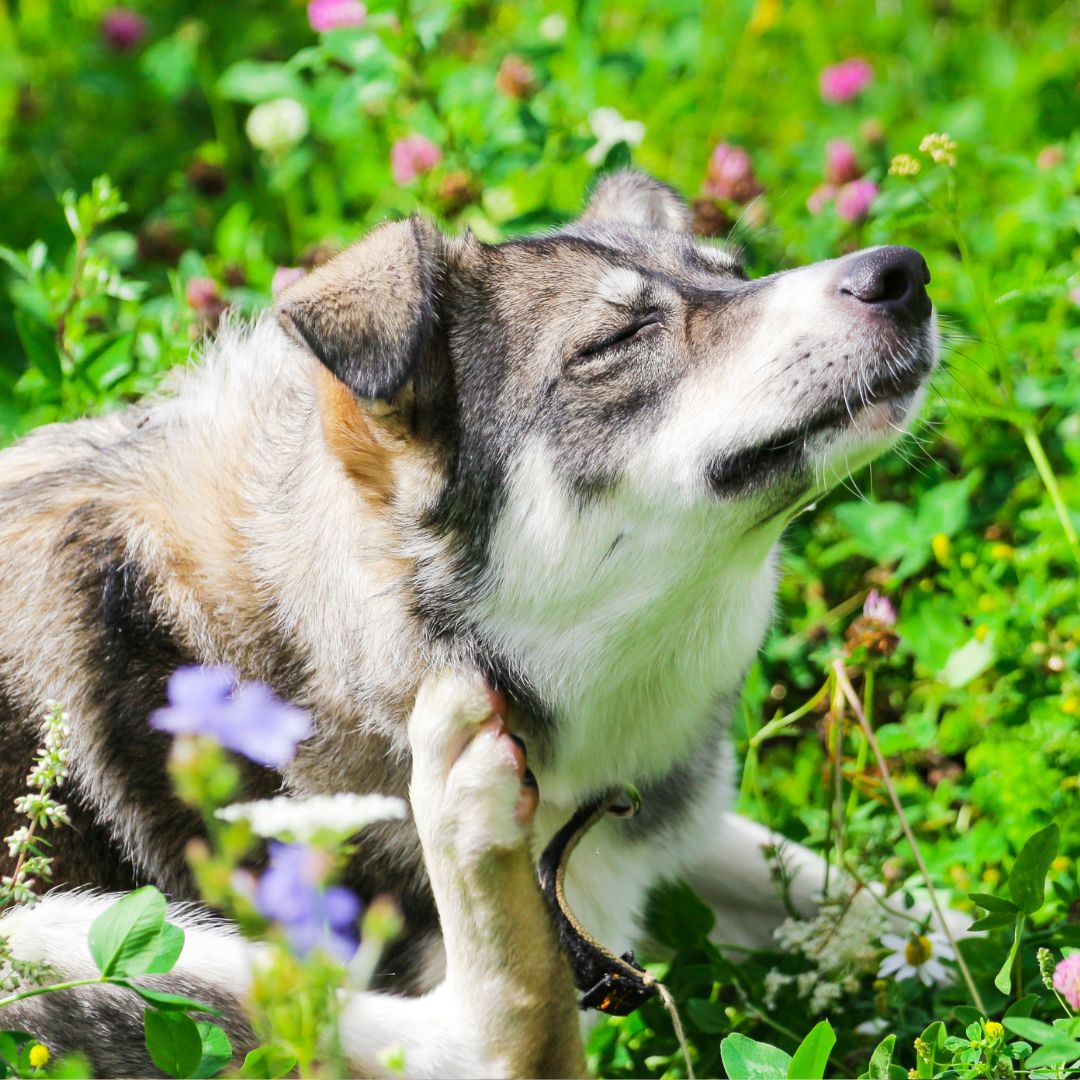
Seasonal allergies can be challenging for dogs. Some antihistamines can be used safely in pets, but the best choice and proper dosage vary from pet to pet. Please call our clinic before starting any over-the-counter allergy medication so we can guide you appropriately. Some pets respond well to over-the-counter treatments, while others may require prescription support. Although allergies cannot be cured, there are many options available to help manage the symptoms. Allergies may worsen over time with repeated exposure to allergens. Late summer and early fall are often the most difficult seasons. Common signs of allergies include licking or chewing at the paws, chronic ear infections, and generalized itching.
Understanding Your Pet’s Temperature
Pet owners often worry their dog has a fever because they feel warm to the touch. However, a dog with a normal temperature will still feel warmer than a human. A dog’s normal body temperature averages around 101.5 degrees, which is approximately 3 degrees higher than ours. If you are ever unsure whether your pet’s symptoms require medical attention, our team at Creekside Animal Hospital is happy to help guide you. Please call us if you have any concerns about your pet’s health.